The Art of Scent Memory: How Fragrance Shapes Personal Identity
Fragrance is a potent trigger for memory. A scent can instantly transport you back to a moment in time or place. Smells are also closely linked to our sense of self. The perfumes we choose (or that choose us) become integral to our identity. I’ve always been fascinated by the relationship between fragrance, memory, and identity. In this blog, I’ll explore how our brains associate certain smells with memories and why perfumes can evoke strong emotional responses. Plus, I’ll share my own experience of discovering signature scents that define me.
Smell, in this way, becomes a quietly potent trigger for remembering and understanding oneself. Where a piece of art or music will be processed by the brain before the emotions are engaged, smell goes in the other direction, prompting a visceral response that can vividly evoke a time and place. Not only does the brain remember specific scents, but also how and where the owner of the brain was living when that scent was consumed. Though perfume might feel trivial, the smells one is drawn to at different points in her life can amount to a memoir of sorts.
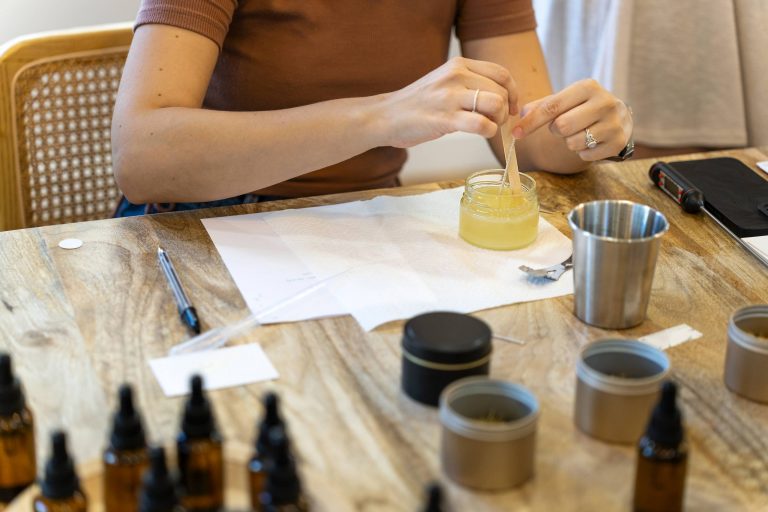
Knowledge of scent memory is essential for finding your signature scent. Start to notice how different scents make you feel — do they evoke calmness, confidence, or creativity? Once students are attuned to this, they can develop a personal scent language that guides their blending choices to achieve blends that evoke more than just a good smell.
Much like writing and painting, the composition of a perfume is an act of self-expression. The combination of notes is the creation of a narrative with a beginning, middle and end, a story that develops from the top note to the dry-down. Various parts of a fragrance can be associated with different expressions of the self—how we choose to present ourselves, what we feel inside and how we want to leave an impression. With time and more trials, students become more aware of what they enjoy and the narratives they want to weave. That is why perfumery is not just a technique but also a meditative process.
The second way in which your memory of smells matters is how you are perceived by other people. Wearing a characteristic scent can be a way of conveying your emotions, your personality, or simply your presence, and it is part of the reason that defining and refining your own fragrance is a deeply personal process. Part of the challenge of making your own perfume is reconciling what it means to you, and how it will be experienced in the world. The best perfumes are those that seem like a part of you, but still leave an impression. As students practice, they learn how to craft fragrances that make them feel assured and distinctive, like a second skin that still makes an impression.
The final piece of this olfactory journey is the olfactory maturation. Just as our preferences for music, books, films, and clothing change over time, so does our relationship with the fragrances that we make and that we wear. There are notes and accords that you loved at the beginning of your perfume journey that now bore you, just as there were fragrances that you found too loud or too weird that are now your signature perfumes. This is a good thing! It’s a sign of olfactory maturation and not a sign of indecision. Being aware of this will help the students notice the changes within themselves, with perfume being the litmus test for personal growth. It will strengthen the bond between themselves and perfume.